Relocating to Austin can feel simple at first glance until you realize that “North Central Austin” covers several neighborhoods that live very differently day to day. If you are trying to narrow your search, you are likely weighing commute options, housing style, lot size, and the kind of everyday rhythm you want once the boxes are unpacked. This guide will help you compare Rosedale, Allandale, Brentwood, and Crestview so you can shortlist the area that fits your lifestyle with more confidence. Let’s dive in.
Why these neighborhoods feel different
North Central Austin’s close-in neighborhoods are not interchangeable versions of the same place. According to city planning documents and neighborhood histories, the biggest differences come down to housing era, lot pattern, and whether daily life is more transit-oriented, bike-friendly, or car-dependent.
That matters when you relocate because your experience of a neighborhood is shaped by more than map distance. Two areas may look equally close to downtown or major job centers, but one may offer a stronger rail option, another may have a larger park presence, and another may give you older homes on tighter lots with a more historic feel.
Start with your daily routine
Before comparing block by block, think about how you want your week to function. If you value transit and errands along major corridors, one neighborhood will likely stand out quickly. If you want a classic residential feel with a strong park anchor, your list may look very different.
A useful way to compare these areas is to focus on four things:
- Housing age and style
- Lot size and neighborhood layout
- Commute and transit options
- Parks, errands, and daily convenience
Rosedale: vintage feel and centrality
What Rosedale housing feels like
Rosedale developed mainly from the 1920s through the 1940s, and that history still shapes the neighborhood today. City and neighborhood planning materials describe older and smaller homes, small lots, narrow driveways, and relatively few garages and sidewalks.
If you are drawn to vintage Austin character, Rosedale often delivers that feeling. Large trees and older housing stock create a more established texture, but the tradeoff is that site constraints can feel tighter than in some nearby neighborhoods.
What to know about change in Rosedale
Rosedale has also seen newer infill and higher-density development along its core transit corridors over time. So while it feels historic and compact, it is not frozen in place.
For relocating buyers, that means Rosedale can be a strong fit if you want central access and older-home charm, but you should be comfortable with smaller lots and a bit more pressure from ongoing redevelopment in certain areas.
Allandale: postwar character and park access
What makes Allandale distinct
Allandale is one of the classic postwar residential neighborhoods in this part of Austin. Its planning area sits between MoPac, Burnet, Hancock, Shoal Creek, and West 45th/West Anderson, and neighborhood history notes roughly 3,500 homes.
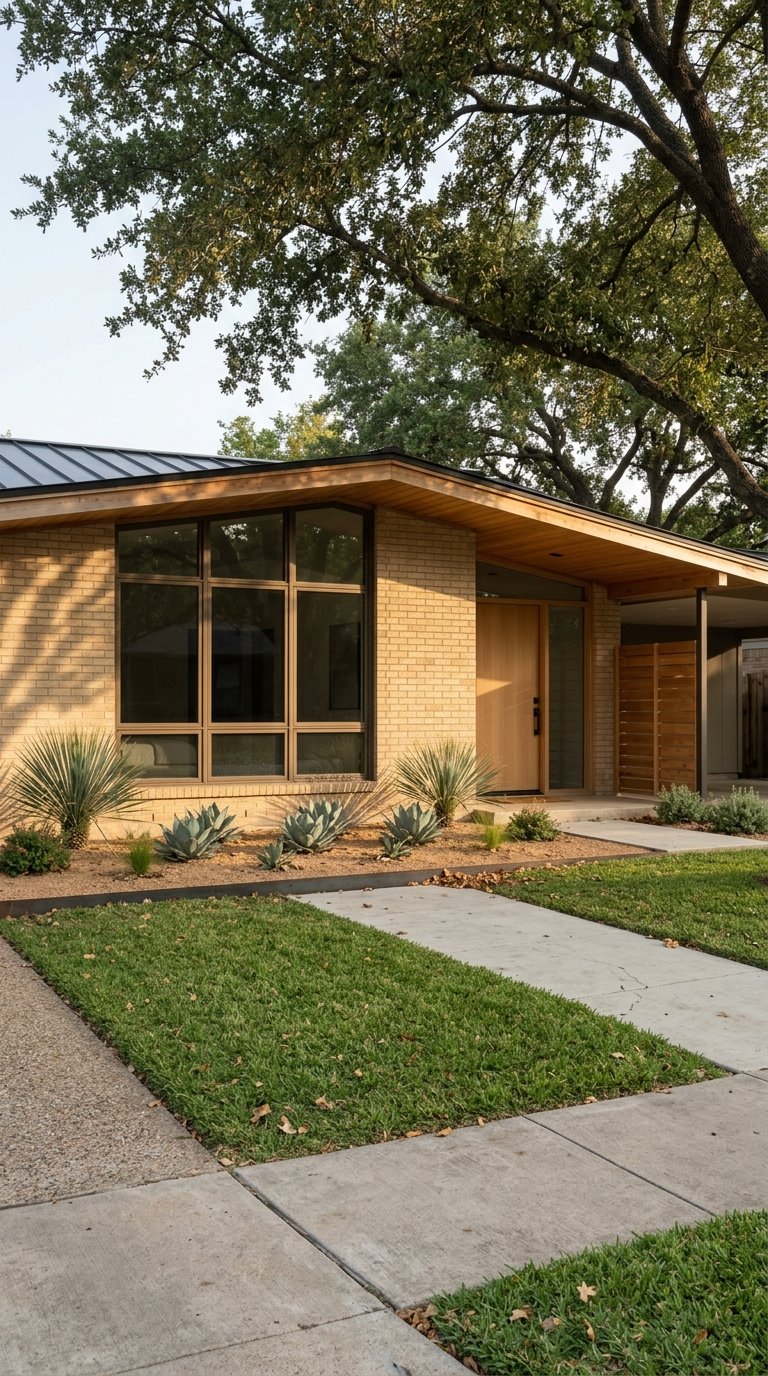
One of its most notable housing stories is the 1954 to 1955 Air-Conditioned Village, a nationally significant middle-class housing experiment that introduced modest Ranch-style homes. Today, that history still supports Allandale’s reputation for postwar single-story character.
Who Allandale may fit best
If you like the idea of a predominantly residential setting but do not want the smallest-lot, oldest-home feel of Rosedale, Allandale may be a more comfortable match. It tends to appeal to buyers looking for classic ranch-style homes and a neighborhood layout that reads clearly residential.
Allandale also stands out for park amenities. Beverly S. Sheffield Northwest District Park spans 31 acres and includes baseball fields, basketball and tennis courts, a pool, picnic areas, a duck pond, and trails along Shoal Creek.
Brentwood: bungalow charm and redevelopment pressure
What Brentwood housing looks like
Brentwood is generally described as the area between Burnet and Lamar, with a long postwar housing base. Neighborhood materials describe many homes as bungalow-style, usually one story with low-to-medium pitched roofs and simple rectangular forms.
Many of those homes were originally purchased by GIs after World War II, which helps explain Brentwood’s enduring modest-scale character. If you want a classic bungalow option among these neighborhoods, Brentwood is often the clearest match.
What buyers should watch in Brentwood
At the same time, Brentwood has ongoing redevelopment. Neighborhood documents note that modest homes are being replaced with larger duplexes and single-family houses.
That does not make Brentwood less appealing, but it does mean you should pay attention to the specific block and nearby property patterns. If you want neighborhood charm and a strong park identity, Brentwood offers both, but you may also notice more teardown and rebuild activity than expected.
Brentwood’s park advantage
Brentwood Park is a 9.26-acre neighborhood park with a swimming pool, wading pool, fields, courts, a playground, and picnic tables. Brentwood Pool is also free to enter in season, which can be a practical plus if you want nearby outdoor amenities without adding much to your routine or budget.
Crestview: transit access and corridor convenience
Why Crestview stands out
Crestview is bounded by Anderson Lane and US 183, Justin Lane, North Lamar, and Burnet Road. City planning documents describe it as predominantly single-family residential and note that it was already mostly built out by the early 2000s, with only about 1% vacant land.
That helps explain why Crestview often feels established even as commercial activity remains concentrated along the major corridors. It is less about large lots or a low-change setting and more about built-in neighborhood fabric with easy access to nearby services.
Crestview’s transit edge
Among these four neighborhoods, Crestview has the strongest rail option. CapMetro’s Red Line includes Crestview Station and connects downtown and Leander, with additional stations including Highland and McKalla.
The Crestview and Wooten planning area also notes that most of the area is within a quarter-mile of a bus route. For buyers who want to rely more on transit, that combination gives Crestview a clear advantage over Rosedale, Allandale, and Brentwood.
Crestview’s amenity pattern
Crestview’s convenience tends to be more corridor-centric than park-centric. Planning documents call for neighborhood-serving commercial and mixed use along Anderson Lane and Burnet Road, and identify the Crestview Shopping Center area for a less intense commercial pattern that better fits the surrounding neighborhood.
If your ideal setup includes errands, transit, and corridor access in the same general pattern of daily life, Crestview may rise to the top quickly.
Comparing commutes across North Central Austin
Burnet and Lamar shape the area
Burnet Road and North Lamar are the main commute corridors for this part of Austin. The city’s Burnet Road Mobility Program covers Burnet Road from Koenig to MoPac and North Lamar from US 183 to I-35.
CapMetro reports that Rapid routes 801 and 803 run every 10 to 15 minutes and connect places including Tech Ridge, The Domain, UT, downtown, South Congress, and Westgate along North Lamar and Burnet. In practical terms, buyers seeking a more car-light lifestyle often prioritize the Burnet and Lamar spine first.
Which neighborhoods lean more car-light
Crestview is the strongest choice if rail access is a priority. Rosedale, Allandale, and Brentwood do not offer the same rail advantage, so commuting there depends more on local street connections, Burnet or North Lamar bus service, biking, and access to MoPac.
Rosedale also has bikeway improvements as part of its transportation profile, which may matter if you are trying to split the difference between walkable enough and car-dependent. The best fit depends on how often you expect to commute, where you need to go most, and how much flexibility you want beyond driving.
A simple neighborhood comparison
| Neighborhood | Best known for | Housing pattern | Daily mobility feel |
|---|---|---|---|
| Rosedale | Vintage Austin feel | Older homes, smaller lots, tighter site constraints | Mix of driving, biking, and corridor access |
| Allandale | Postwar ranch character | Predominantly residential, modest single-story homes | Mostly driving with good access to major routes |
| Brentwood | Classic bungalow charm | Postwar homes with visible redevelopment activity | Driving plus corridor convenience |
| Crestview | Transit and corridor access | Established single-family fabric near major commercial corridors | Strongest transit option of the group |
How to choose the right fit
Choose Rosedale for older-home texture
Rosedale may be the best fit if you want the oldest-feeling and most central-feeling neighborhood of the group. You may appreciate mature trees, smaller lots, and a stronger sense of vintage Austin texture.
Choose Allandale for ranch homes and park space
Allandale often makes sense if you want postwar ranch history, a major park anchor, and a neighborhood that still reads as predominantly residential. It can feel like a middle ground between central convenience and a more traditional neighborhood layout.
Choose Brentwood for bungalow character
Brentwood is a strong option if bungalow-era charm and a true neighborhood-park identity are high on your list. Just be prepared to evaluate redevelopment activity on a block-by-block basis.
Choose Crestview for transit convenience
Crestview is often the best match if you value transit access and corridor convenience more than a quiet, low-change block pattern. If reducing car dependence matters to you, this is the neighborhood that deserves the closest look.
Final thoughts for relocating buyers
When you relocate, the right neighborhood is rarely the one that looks best on paper alone. It is the one that supports how you actually want to live, whether that means older-home character, postwar ranch style, bungalow charm, stronger transit access, or easier daily errands.
A thoughtful neighborhood comparison can save you time and help you focus your search before you tour homes. If you want calm, neighborhood-level guidance as you compare North Central Austin options, Dru Brown can help you evaluate the details that make one pocket a better fit than another.
FAQs
What makes Rosedale different from Allandale for relocating buyers?
- Rosedale generally offers older homes, smaller lots, and a more vintage central Austin feel, while Allandale is better known for postwar ranch-style homes and a predominantly residential layout.
Which North Central Austin neighborhood has the best transit access?
- Crestview has the strongest transit profile because it includes access to CapMetro’s Red Line at Crestview Station and has broad bus-route coverage within the planning area.
Is Brentwood a good choice if you want classic Austin housing character?
- Brentwood is often the strongest match if you want classic bungalow-style character, but you should also expect to see some teardown and rebuild activity in the neighborhood.
Which neighborhood offers the strongest park amenities in North Central Austin?
- Allandale and Brentwood stand out most for park amenities, with Beverly S. Sheffield Northwest District Park in Allandale and Brentwood Park and Pool serving Brentwood.
How should you compare North Central Austin neighborhoods when relocating?
- Focus on housing age and style, lot pattern, commute options, transit access, and whether you want a park-centered or corridor-centered daily routine.